


Centuries of Ottoman rule left behind a rich Islamic heritage across Albania, from quiet tekkes in the mountains to grand mosques on the coast. Most religious landmarks were destroyed or repurposed after Albania declared itself an atheist state in 1967. The historic sites that survived are well worth a visit
Whether you’re exploring Tirana, Berat, Shkodër, or Vlorë, here are 5 of the most fascinating Muslim heritage sites to add to your route.
1. Et’hem Bey Mosque (Tirana)
Right in the middle of Skanderbeg Square, surrounded by Tirana’s modern bustle and brutalist government architecture, stands the 18th-century Et’hem Bey Mosque.
Why it’s special: Step inside, and you’ll notice something unusual for classical Islamic architecture: detailed wall paintings depicting nature, rivers, waterfalls, and countryside scenes instead of strictly geometric patterns.
Visitor tip: It’s an active place of worship, so time your visit outside of daily prayer times, remove your shoes at the entrance, and dress modestly.
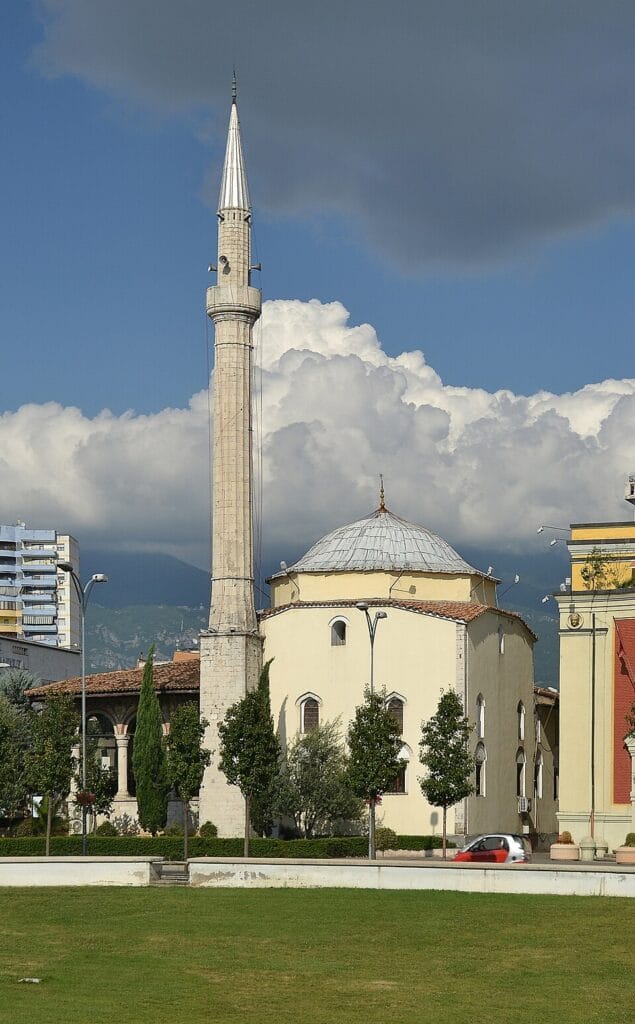
by Pudelek / CC BY-SA 4.0
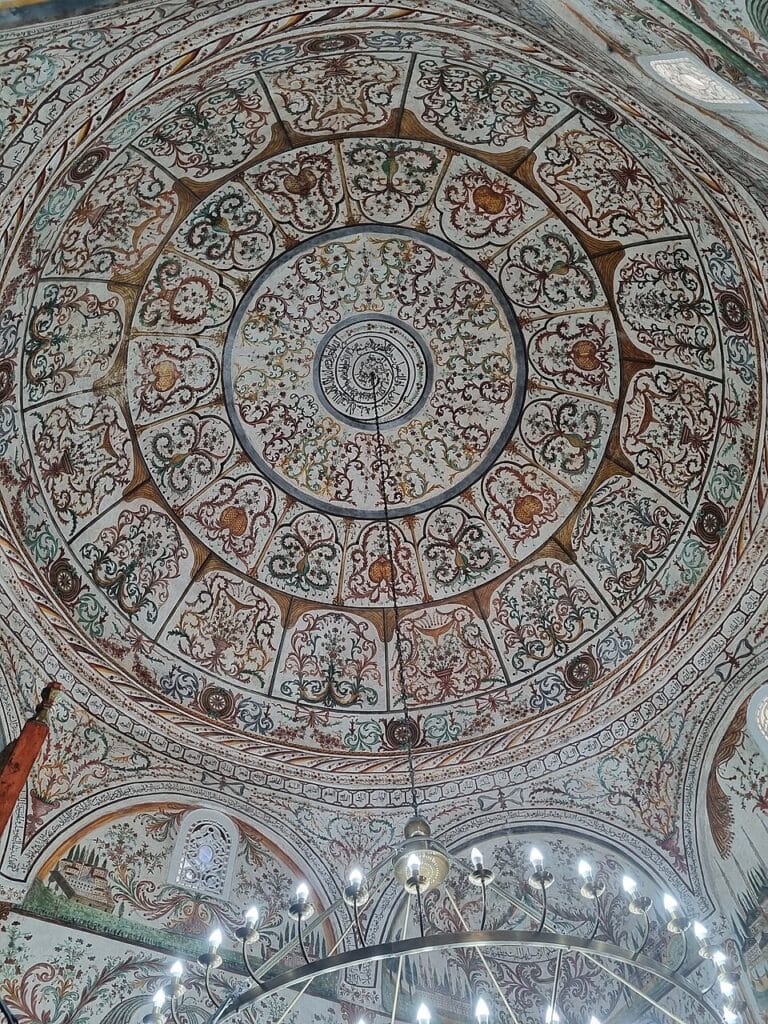
via Wikimedia Commons / CC BY-SA 4.0
2. The King’s Mosque & Helveti Tekke (Berat)
Located in Berat’s historic Mangalem district, this two-part site offers a look into both mainstream Ottoman history and Albania’s deep Sufi tradition. The King’s Mosque (Xhamia e Mbretit) dates back to 1492, built under Sultan Bayezid II.
Why it’s special: Right next door is the Helveti Tekke, a gathering space for the Sufi order. Step inside to see one of the best-preserved wood-carved ceilings in the Balkans, hand-painted with intricate gold leaf and floral motifs.
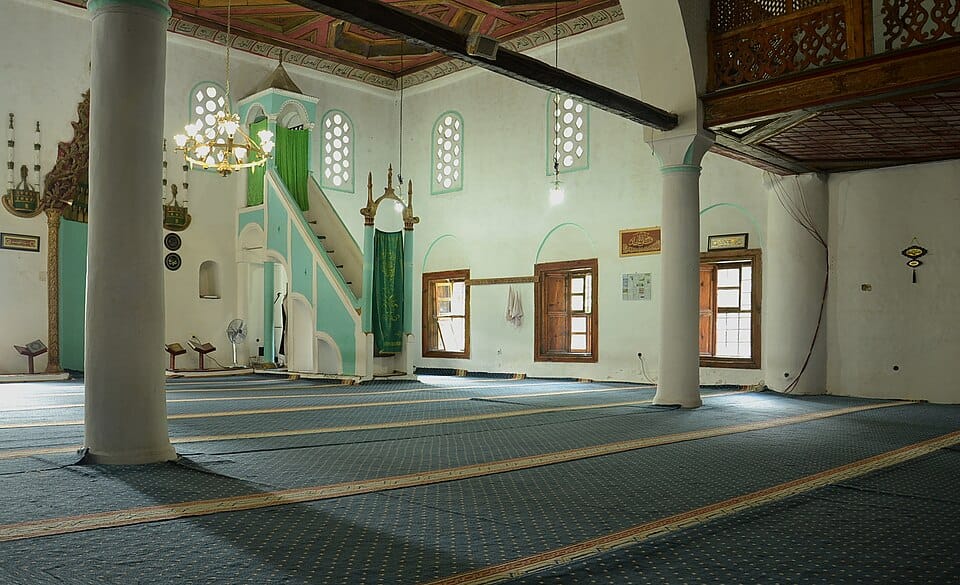
by WoALUG / CC BY-SA 4.0

by Balkanique / CC BY-SA 4.0

3. The Lead Mosque (Shkodër)
Set in an open field near the Drin River just beneath Rozafa Castle, the Lead Mosque (Xhamia e Plumbit) was built in 1773 by local ruler Mehmet Pasha Bushati.
Why it’s special: It gets its name from the heavy lead plates that originally coated its classic Ottoman multi-domed roof. Sitting peacefully outside the city center with Rozafa Castle looming above it in the background, it’s one of the most striking architectural views in northern Albania.
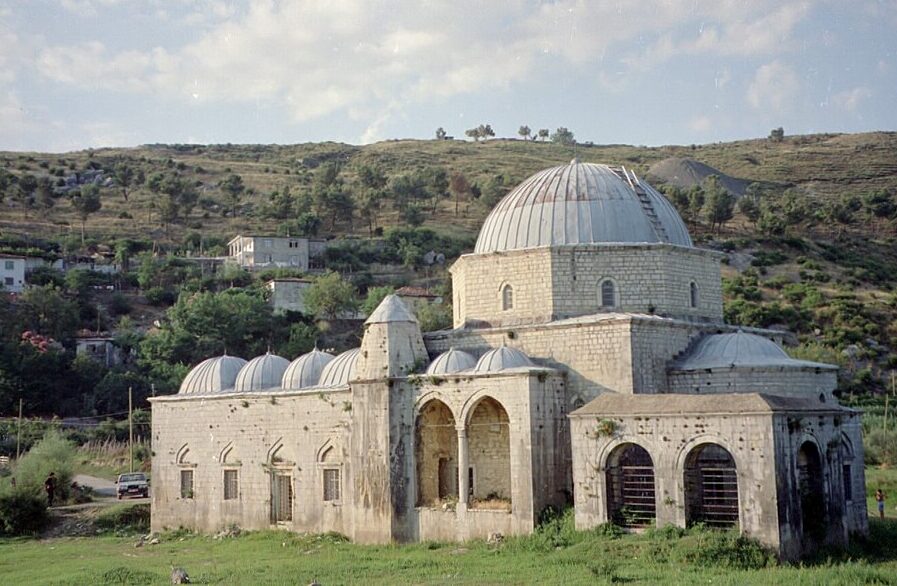
by Helmut Kienzle / CC BY 4.0
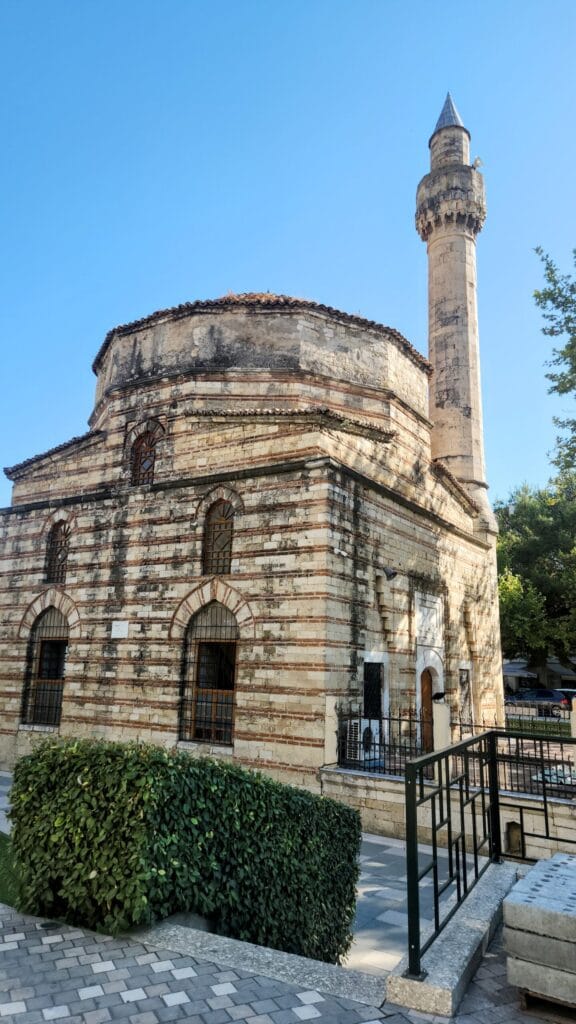
4. Muradie Mosque (Vlorë)
Located right in the heart of Vlorë, this compact 1537 structure was designed by Mimar Sinan—the legendary master architect of the Ottoman Empire responsible for Istanbul’s iconic Süleymaniye Mosque.
Why it’s special: The Muradie Mosque displays classic Ottoman single-dome stonework, featuring alternating rows of warm red brick and carved white stone, topped by a single, perfectly proportioned minaret.
5. The Grand Mosque of Tirana (Namazgjah)
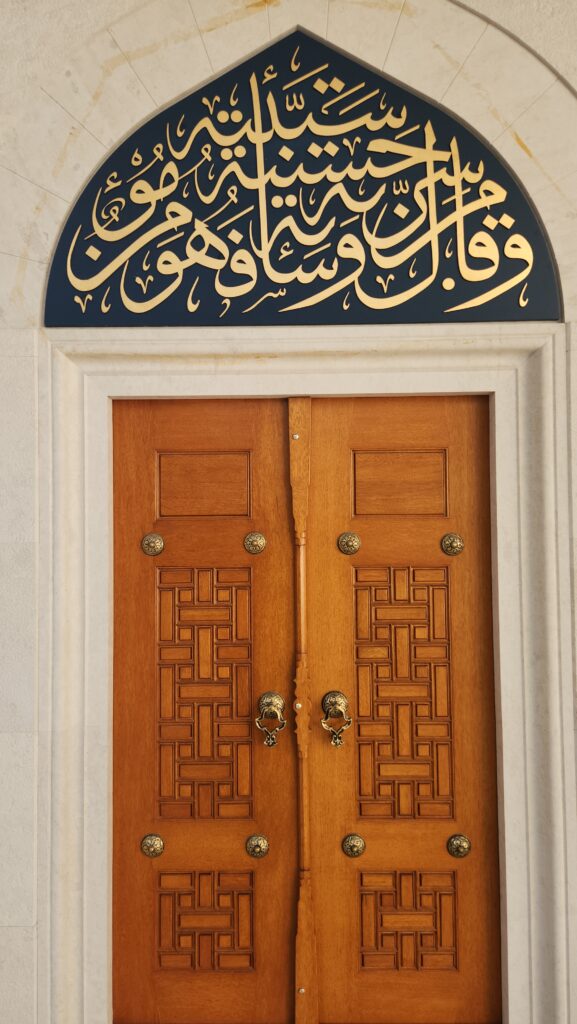
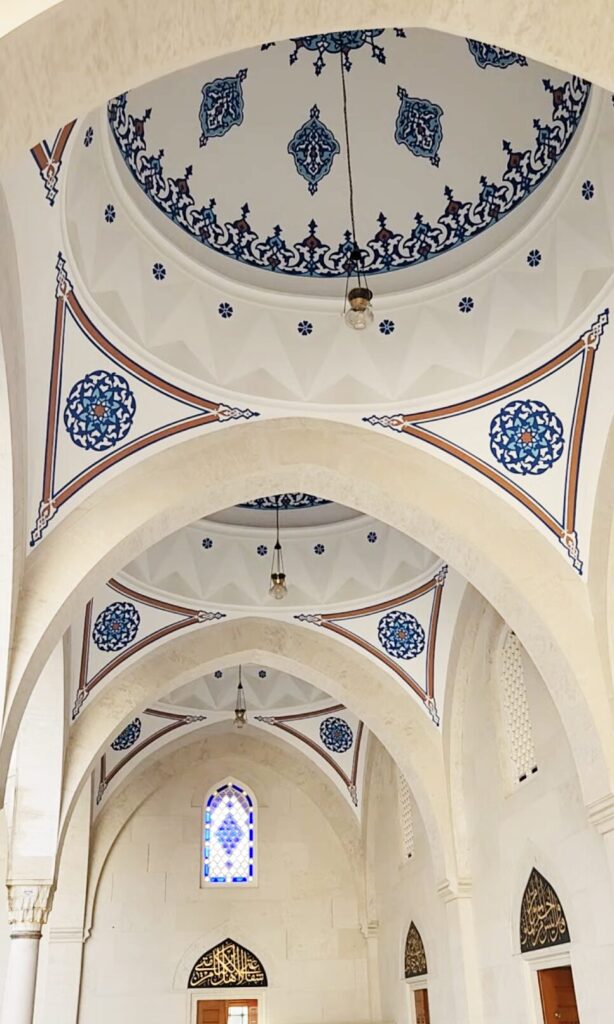
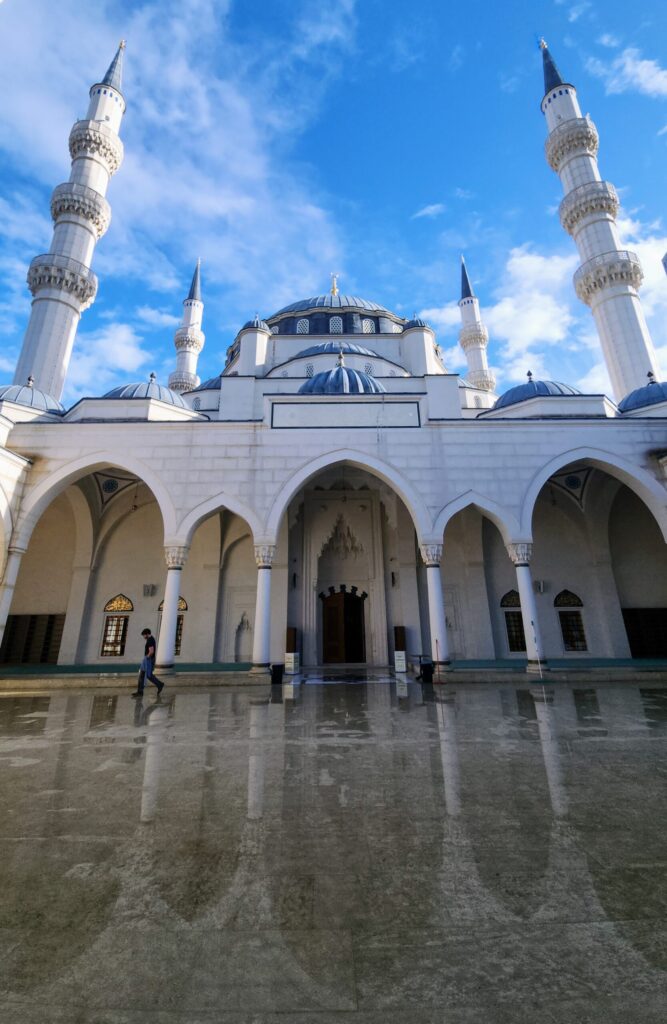
Located near the Albanian Parliament in central Tirana, the Namazgjah Mosque is the largest mosque in the Balkans.
Why it’s special: Designed in a grand, classical Ottoman style with four 50-meter minarets, the modern complex holds up to 10,000 worshippers alongside a library, exhibition space, and cultural center.
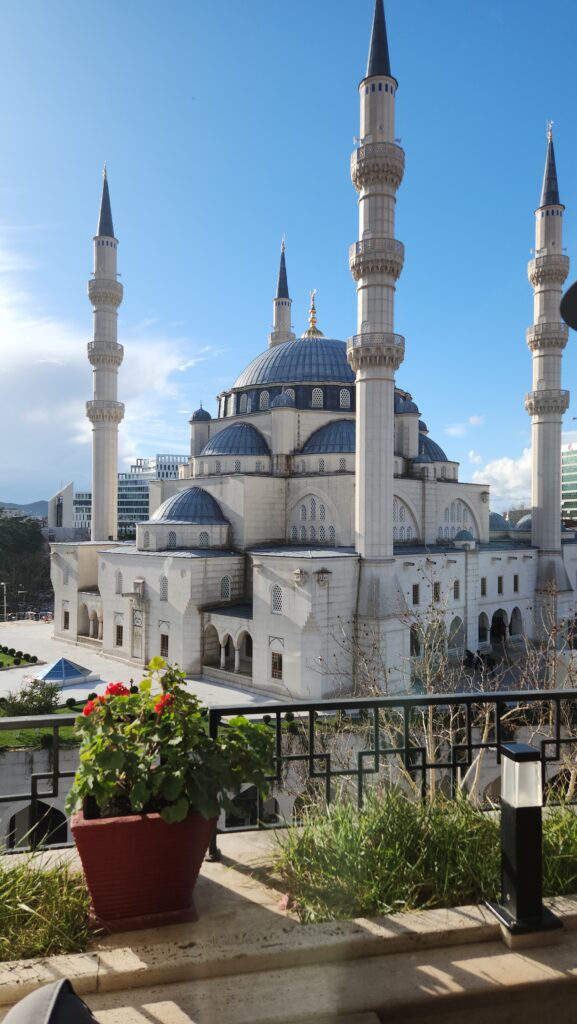
If you want an easy way to see these historical landmarks and learn more about the city’s diverse heritage, you can book a guided walking tour that takes you to the Namazgah Mosque and other key city sights.
It’s a quick, two-hour guided trip that helps you uncover the background behind these architectural pieces without having to navigate everything on your own.
Quick Visitor Etiquette
Curious to learn even more about Muslim travel in Albania?
Check out my article Muslim-Friendly Tirana: Halal Food, Luxury Hotels & Things to Do (2026)