


Today, Albanian is written with a familiar Latin alphabet. If you know a little Albanian, you probably recognize letters like ë and ç, along with combinations like dh, gj, ll, nj, rr, sh, th, xh and zh.
But go back a few centuries and things get much stranger.
Before Albanians settled on the alphabet used today, their language appeared in Latin, Greek and Arabic letters depending on region, religion and education. More surprisingly, people also invented entirely new writing systems specifically for Albanian.
Some looked vaguely familiar. Others looked like they belonged in an undeciphered medieval manuscript.
Most disappeared.
Two of the coolest are the Elbasan alphabet and the Vellara alphabet, obscure writing systems that offer a glimpse into a time when nobody had quite decided what written Albanian was supposed to look like.
And they weren’t the only ones.

Albania Had an Alphabet Dilemma
For centuries, Albanian didn’t have one standard writing system everyone agreed on.
Catholic writers often used Latin letters. Orthodox writers leaned toward Greek. Some Muslim Albanian writers used Arabic script. The problem was that none of these were designed specifically for Albanian, which has plenty of sounds that don’t fit neatly into them.
So people started getting creative.
Instead of simply arguing over which existing alphabet to use, some writers basically said: fine, let’s make our own.
That is how Albania ended up with several original alphabets, including Elbasan, Todhri, Vellara and Vithkuqi.
For a relatively small language, that is pretty wild.
The Elbasan Alphabet Looks Like Something From a Secret Manuscript
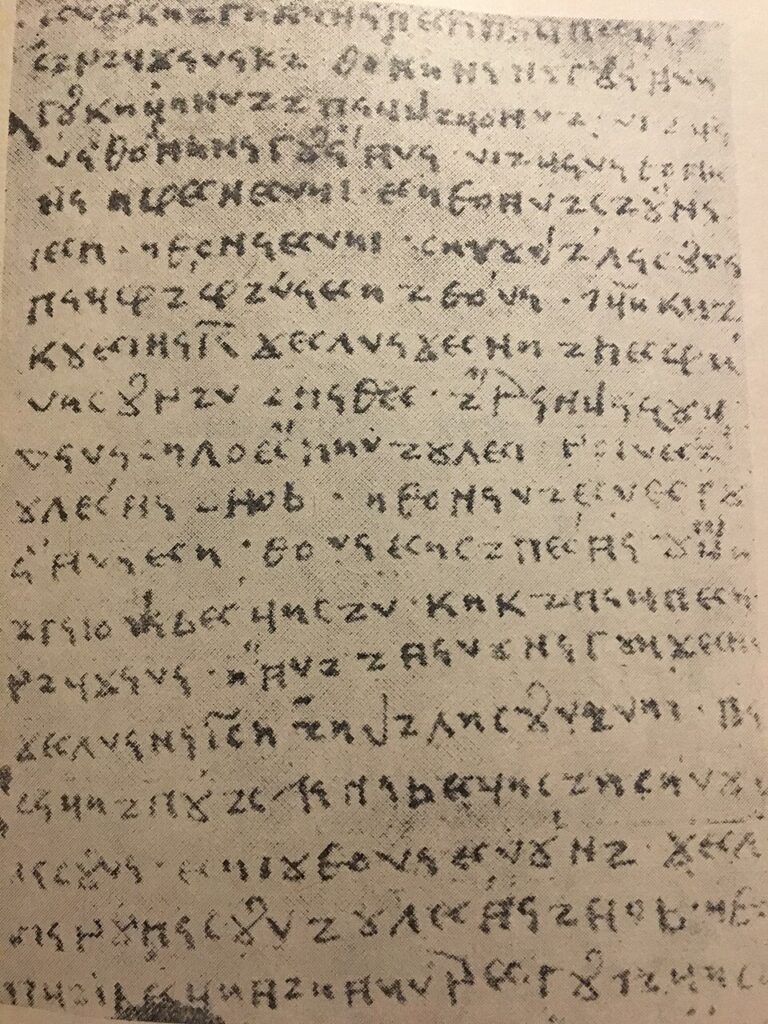
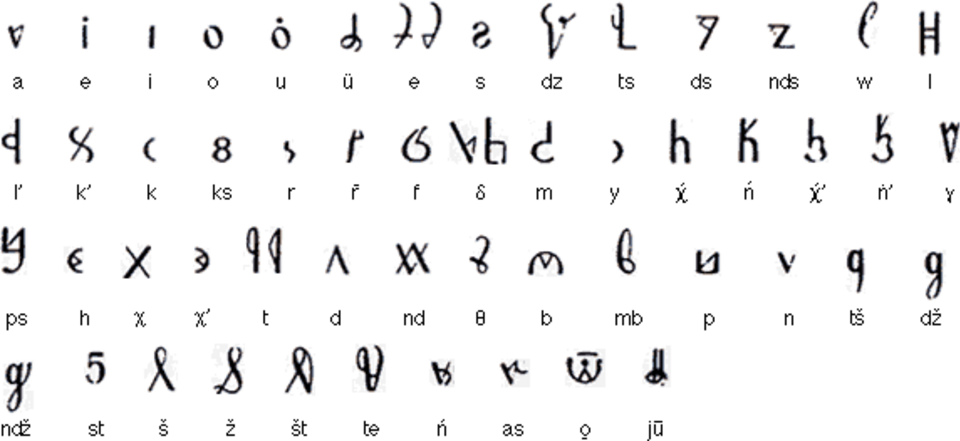
One of the oldest original Albanian alphabets appears in an 18th-century religious manuscript known as the Elbasan Gospel Manuscript.
And visually, it is gorgeous.

The script contains around 40 characters, many of which look completely unfamiliar if you’re used to the Latin alphabet. It has that strange, elegant quality where you could easily imagine it carved into a stone wall or written inside an occult-looking manuscript.
But this wasn’t just decorative. The alphabet was actually designed around Albanian sounds, and linguist Robert Elsie considered it surprisingly effective at representing the language.
That’s what makes it so interesting: this was not some clumsy experiment. Someone sat down and seriously tried to design a better writing system for Albanian. We still don’t know for certain who created it. Gregory of Durrës has often been suggested, while other research points to Cosmas of Durrës. So even the person behind it is a little mysterious.
It May Have Been About Identity Too
The alphabet question wasn’t purely technical.
In Ottoman-era Albania, writing systems came with cultural and religious baggage. Latin could point toward the Catholic world, Greek toward Orthodoxy and Arabic toward Islam.
Furthermore, the need for these scripts was compounded by the fact that for much of the Ottoman period, the use of written Albanian was restricted, forcing the language to transition into a strictly oral tradition. This suppression risked the eventual loss of the language’s literary soul.
Creating an entirely new alphabet gave Albanian another option: a script that didn’t immediately belong to somebody else. That may be part of why these homegrown alphabets kept appearing. There is something rebellious about it.
Instead of choosing between the writing systems already surrounding them, Albanian writers were experimenting with what their language might look like completely on its own terms.
Then There Was the Vellara Alphabet
The Vellara alphabet has an even stranger backstory.
It is connected with Ioannis Vilaras, also known as Jan Vellara, a Greek doctor and poet who eventually became physician to the son of Ali Pasha of Tepelena. Vellara spoke Albanian, and in 1801 he created bilingual Greek-Albanian language notes using a special 30-letter alphabet for Albanian.
His script looked a little more familiar than Elbasan because it borrowed from Latin and Greek forms, but it still included its own strange adaptations. And this wasn’t just sitting in some theoretical grammar book. Vellara actually used the alphabet in a real Albanian letter.

Yes, Someone Actually Wrote Letters in It
On October 30, 1801, Vellara wrote in Albanian from Vokopolë, south of Berat, while traveling with Veli Pasha during a military campaign.
I love this detail because it turns the Vellara alphabet from an academic curiosity into something much more tangible.
Imagine receiving a completely normal letter from someone, except it is written in an alphabet that basically disappears from history afterward.
His surviving manuscript also contains Albanian phrases, vocabulary, proverbs and grammatical notes. It eventually ended up in the Bibliothèque Nationale in Paris, where it is still preserved.

Elbasan Had Yet Another Alphabet
Apparently one custom alphabet wasn’t enough for Elbasan.
The city was also associated with the Todhri alphabet, usually linked to a teacher and writer known as Dhaskal Todhri. This script was even more elaborate, with more than 50 characters.
And unlike some of the other experimental alphabets, Todhri appears to have been used in actual everyday life. Surviving documents include merchant records and family writing from the late 1700s. Hundreds of pages written in the script have been documented.
Even better: Todhri was officially added to Unicode in 2024. So yes, a nearly forgotten alphabet once used by merchants in Ottoman-era Albania can now technically exist on your phone or computer.
Albania Kept Inventing Alphabets
The experimentation didn’t stop there.
In the 1800s, Naum Veqilharxhi created the Vithkuqi alphabet, which appeared in an Albanian spelling book in 1844.
There was also the obscure Veso Bey alphabet, reportedly used privately by a family from Gjirokastër. At one point, Albania had a genuinely chaotic mix of borrowed alphabets, invented alphabets and regional writing traditions floating around at the same time.
Eventually, somebody had to pick one.

So Why Don’t Albanians Write Like This Today?
By the early 1900s, having multiple competing alphabets had become a major headache.
Schools needed textbooks. Newspapers needed readers. Writers needed to actually understand each other. In 1908, Albanian intellectuals gathered at the Congress of Manastir and worked toward standardizing the language around a Latin-based alphabet.
That ultimately led to the Albanian alphabet used today. The other scripts faded away. Elbasan disappeared from everyday use. So did Vellara, Todhri and Vithkuqi. But they left behind something much more interesting than a historical footnote.
If this felt like the beginning of a mystery, continue into Albania’s folklore, sacred sites and ancient magic.