


Albania’s coastline, wetlands, forests and mountains support a surprisingly diverse range of wildlife. The country is home to bears, wolves, golden eagles, flamingos and the critically endangered Balkan lynx.
Some of these animals are relatively easy to spot in the right location. Others are so rare and elusive that even researchers rely on tracks and camera traps to confirm their presence. Here’s what lives in Albania and what you might realistically see.
Balkan Lynx
The Balkan lynx is Albania’s wildlife celebrity, although it is very much the kind of celebrity that refuses interviews, avoids cameras and disappears into the mountains.
This critically endangered subspecies lives in remote forest and mountain habitat in the western Balkans. In Albania, conservation work has focused on places such as Munella and other rugged northern and eastern landscapes. Even researchers usually confirm its presence through camera traps, tracks and other signs rather than casual sightings.
💎 Your chances of seeing one: Extremely low
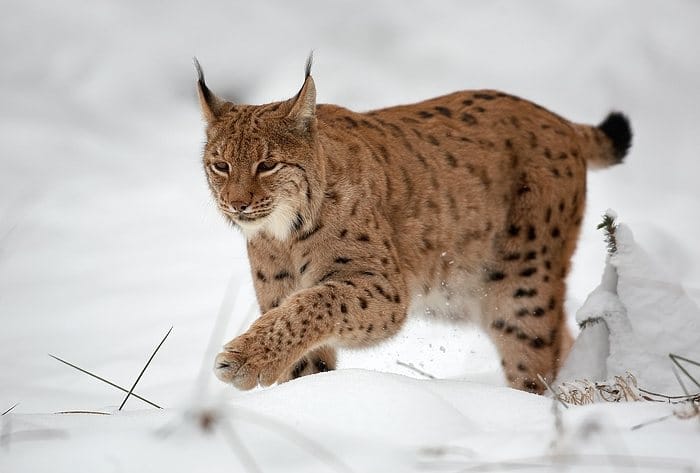
Photo: Martin Mecnarowski | CC BY-SA 3.0 | Wikimedia Commons
.jpg)
Brown Bear
Yes, Albania has brown bears. No, you are not likely to meet one while walking back from dinner in Tirana.
They live mainly in large, quiet mountain and forest areas, particularly in the north, northeast and southeast. Bears usually avoid people, but trash, food scraps and careless feeding can draw them closer to settlements.
If you hike in remote country, make some noise, keep food secured and never approach a cub. A bear sighting from a safe distance is memorable.
🔴 Your chances of seeing one: Very rare
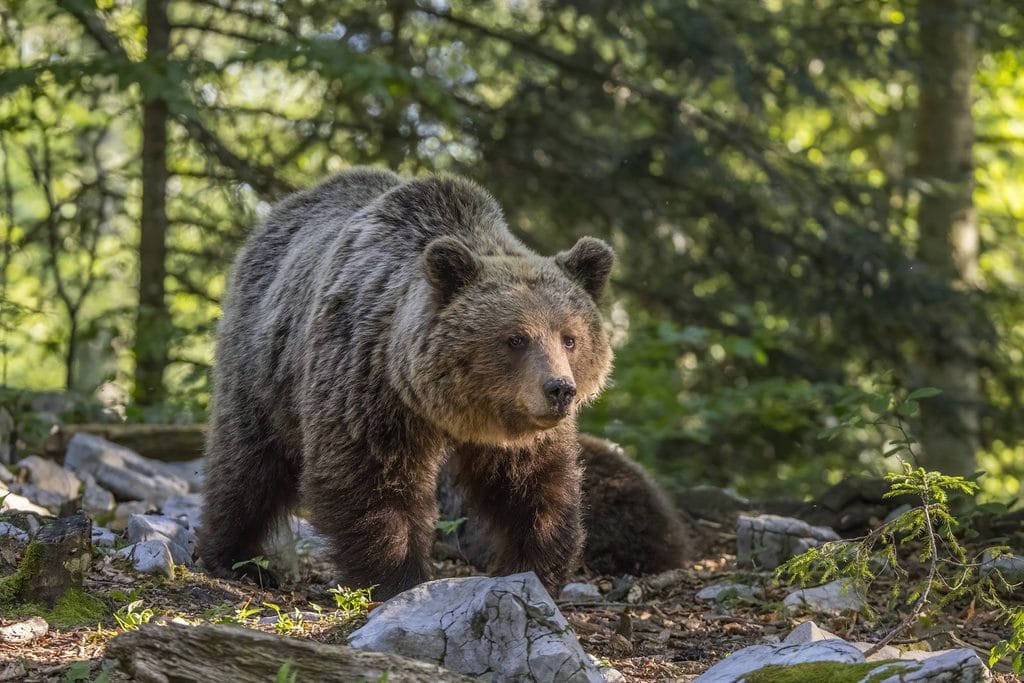
Photo: Charles J. Sharp | CC BY-SA 4.0 | Wikimedia Commons
_female_1.jpg)
Gray Wolf
Wolves still live in Albania’s remote mountains and forests. They are widespread enough to be part of the ecosystem, but secretive enough that most visitors will never see one.
You are more likely to spot tracks or hear distant howling than watch a wolf stroll across your hiking trail on cue. They tend to avoid people, though conflict can happen where wolves and livestock share the same landscape.
🔴 Your chances of seeing one: Very rare
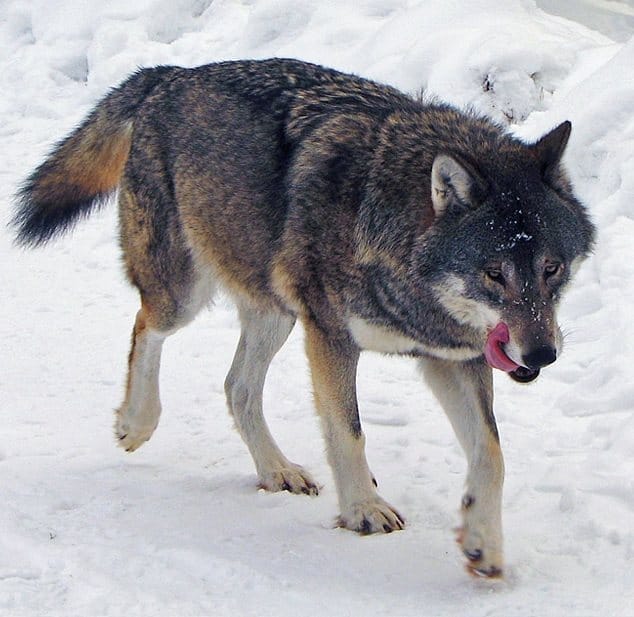
Photo: Daniel Mott, cropped by Mariomassone | CC BY-SA 2.0 | Wikimedia Commons

Balkan Chamois
The Balkan chamois is basically a mountain goat-antelope with excellent balance and no fear of heights.
It lives on rocky slopes and high mountain terrain, including parts of the Albanian Alps and the Korab area. Its coloring blends beautifully into stone, so binoculars help. Look for movement along ridges and steep slopes rather than expecting one to pose beside the trail.
🟡 Your chances of seeing one: Possible with patience
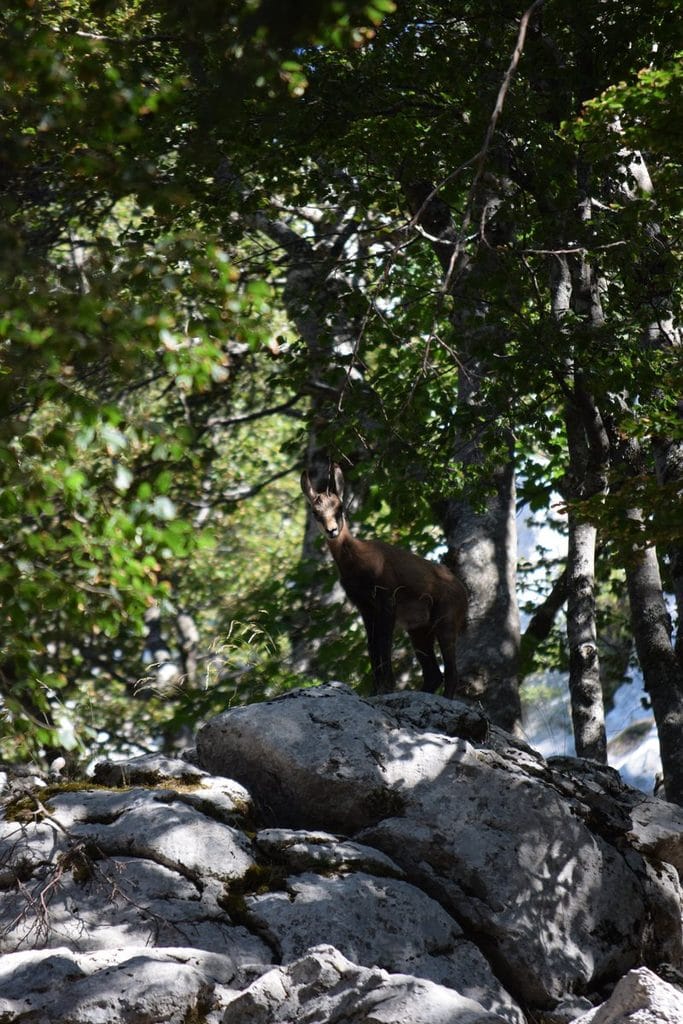
Photo: Juraj Ahel | CC BY 4.0 | Wikimedia Commons

European Wildcat
At first glance, a European wildcat can look like a very sturdy tabby that has had enough of everyone. It is a genuine wild species, with a thick ringed tail, a broad head and a strong preference for keeping its distance.
Wildcats use forests, scrub and quiet rural landscapes. They are mostly active around dusk and at night, which makes sightings uncommon. Hybridization with domestic cats is also a conservation concern.
🟠Your chances of seeing one: Low

Photo: euqirneto | CC BY 4.0 | Wikimedia Commons

European Otter
European otters live around rivers, lakes, lagoons and wetlands in Albania, but they are masters at being present without being seen.
Prespa, Butrint and other healthy wetland systems can support otters. Early mornings and quiet evenings offer the best chance, although tracks and droppings are usually easier to find than the animal itself.
🟠Your chances of seeing one: Low

Photo: Christian Ursilva | CC BY-SA 4.0 | Wikimedia Commons
.jpg)
Golden Eagle
The golden eagle feels like the obvious star of an Albanian wildlife guide. It is enormous, dramatic and literally appears on the country’s flag, even if the flag uses a double-headed eagle rather than a field-guide illustration.
Golden eagles favor open mountain country and rocky terrain. They are easier to see than Albania’s large mammals, but you will often be looking at a distant silhouette circling on warm air rather than a National Geographic close-up.
Bring binoculars and learn the difference between an eagle and the many buzzards you may also see.
🟡 Your chances of seeing one: Possible in mountain areas
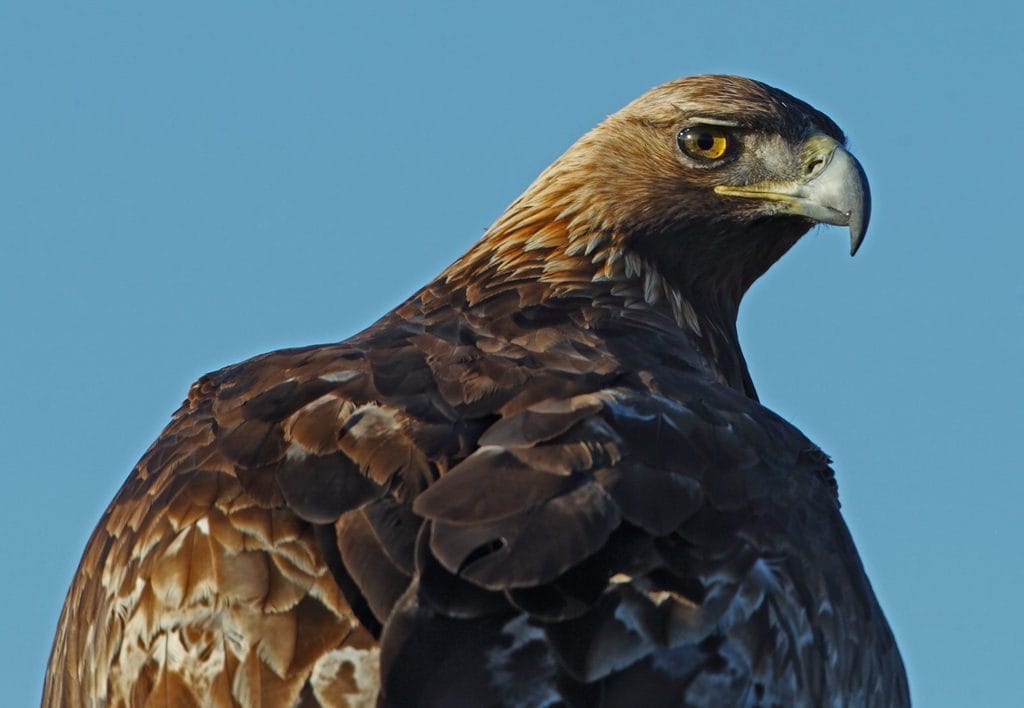
Photo: Juan Lacruz | CC BY-SA 3.0 | Wikimedia Commons

Dalmatian Pelican
The Dalmatian pelican is one of the best wildlife sightings you can realistically plan for in Albania. It is also hard to mistake for anything else. These birds are huge, with a wingspan that can reach around three meters and a slightly prehistoric expression.
Divjake-Karavasta is the classic place to look for them, and they can also be seen in other coastal wetland areas. Albania’s pelican population has been an important conservation story, but breeding colonies remain sensitive to disturbance.
🟢 Your chances of seeing one: Good in the right location

Photo: gailhampshire | CC BY 2.0 | Wikimedia Commons
.jpg)
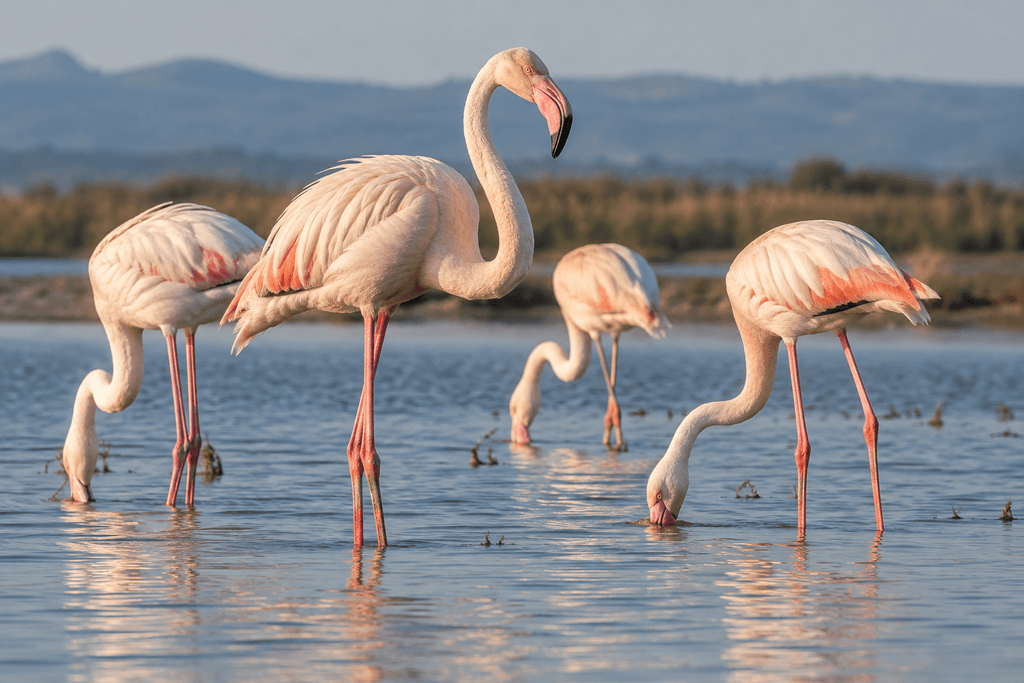
Greater Flamingo
Flamingos in Albania gather in the country’s coastal lagoons. Narta Lagoon near Vlore is one of the best-known places to see them, with numbers changing according to season, water conditions and migration. From a distance they may look more white than bubblegum pink, especially younger birds, so manage your expectations before accusing them of false advertising.
🟢 Your chances of seeing one: Good when present
Egyptian Vulture
The Egyptian vulture is smaller and more elegant than the word vulture suggests. Adults have a white body, dark flight feathers and a bright yellow face that makes them look permanently unimpressed.
Albania is part of the species’ Balkan breeding range. These migratory birds return from Africa and use open landscapes, cliffs and traditional pastoral areas. Poisoning, unsafe power infrastructure and changes in food availability remain serious threats.
🟠Your chances of seeing one: Low
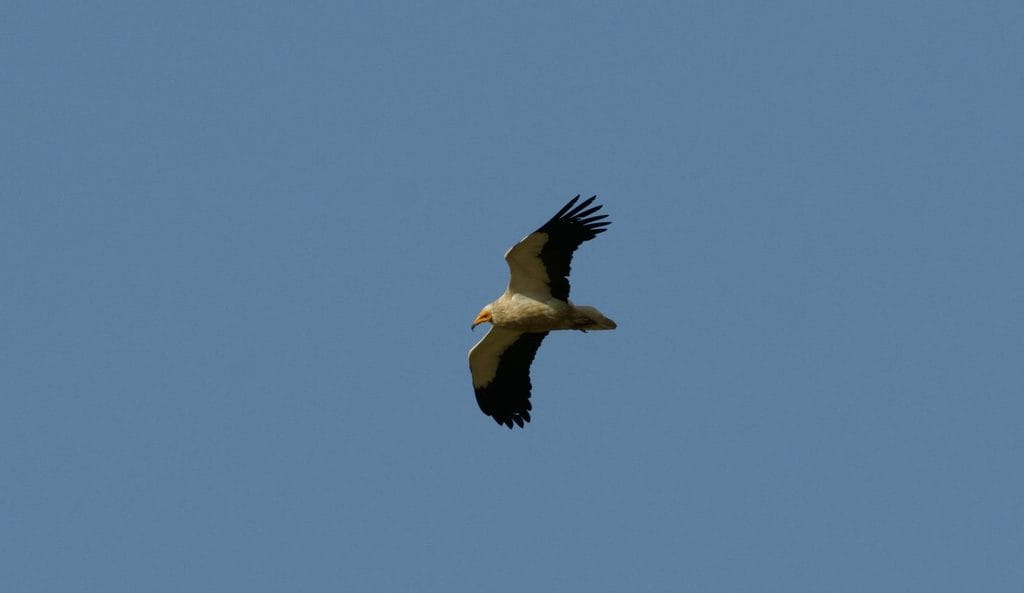
Photo: martin_ingemansson | CC BY 4.0 | Wikimedia Commons
,_Kuk%C3%ABs_District,_Albania_1.jpg)
Dolphins
Dolphins are among the most realistic marine wildlife sightings along the Albanian coast. Bottlenose dolphins are the species most visitors are likely to recognize, while other cetaceans may also pass through the wider Adriatic and Ionian seas.
Choose boat operators that do not chase, crowd or cut across the animals. A calm sighting is better for the dolphins and usually better for your photos too.
🟡 Your chances of seeing one: Possible from boats
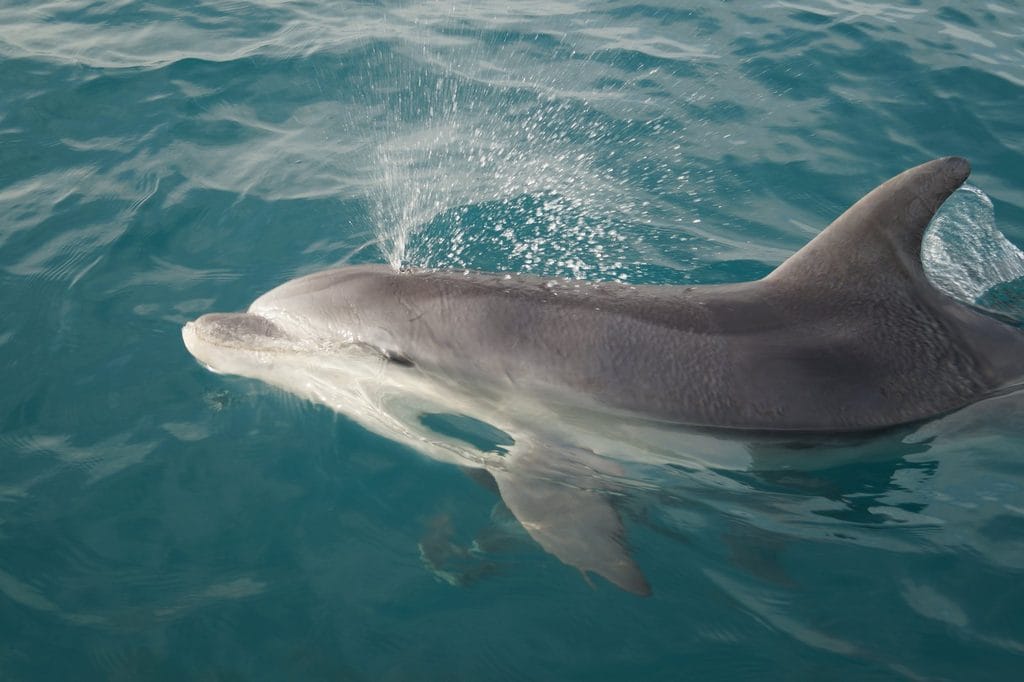
Photo: Cloudette 90 | CC BY-SA 4.0 | Wikimedia Commons

Mediterranean Monk Seal
The Mediterranean monk seal is the unicorn of Albania’s coast. It is real, rare and not waiting around a sea cave for your arrival.
Monk seals need quiet coastal habitat, caves and very little disturbance. Occasional records and visits along the Albanian coast matter, but they should not be turned into a promise that tourists can book a seal-watching afternoon.
💎 Your chances of seeing one: Extremely low. If you ever see one, stay well back, do not block its route to the sea and do not share a precise location publicly.
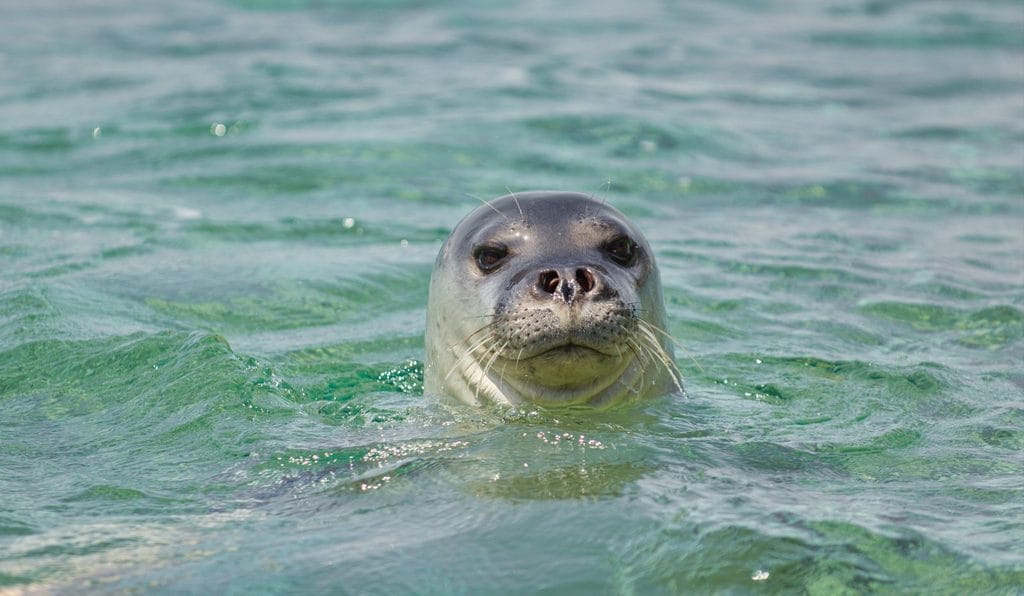
Photo: Vasilis Drosakis | CC BY-SA 4.0 | Wikimedia Commons

Sea Turtles
Loggerhead sea turtles are found in Albanian waters, and green turtles may also occur in the wider region. Turtles can be seen at sea, while injured or accidentally caught animals sometimes reach rescue and rehabilitation efforts on the coast.
Nesting has also drawn growing attention. Any nest, track or hatchling should be treated as a conservation event, not an invitation to reorganize the beach for a better selfie.
🟡 Your chances of seeing one: Possible from boats or swimming. Give turtles space and never touch, feed or lift one unless trained rescuers are directing the situation.
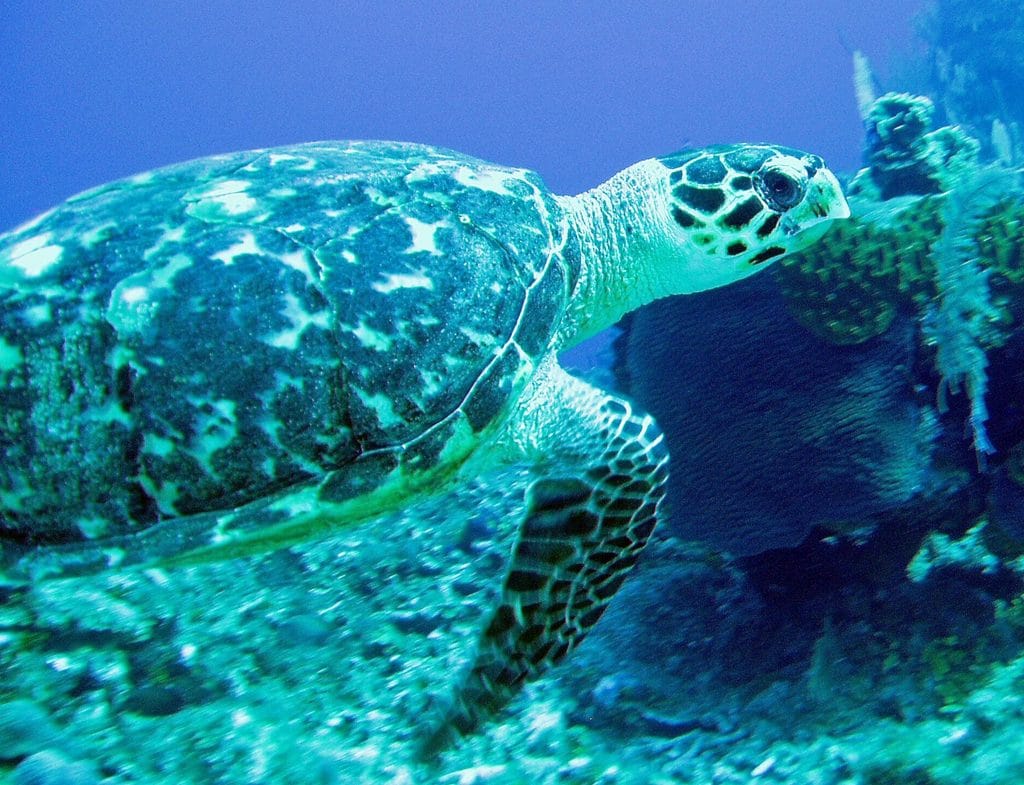
Photo: James St. John | CC BY 2.0 | Wikimedia Commons
_(Grand_Cayman_Island,_Caribbean_Sea)_2.jpg)
Where to See Wildlife in Albania
A realistic look at what you might encounter and how likely you are to see it.
| Area | Wildlife you may encounter | Your realistic chances |
|---|---|---|
| Divjakë-Karavasta | Dalmatian pelicans, herons and other waterbirds | Good, especially with binoculars |
| Narta Lagoon | Flamingos and migratory birds | Good when birds are present |
| Albanian Alps | Golden eagles, chamois and signs of larger mammals | Possible with patience |
| Korab-Koritnik | Chamois, bears, wolves and lynx habitat | Large mammals are rarely seen |
| Prespa Lakes | Pelicans, otters and wetland birds | Birds are much easier to spot than otters |
| Karaburun-Sazan Coast | Dolphins, sea turtles and possibly monk seals | Dolphins are possible; seals are extremely rare |
| Remote Forests | Wildcats, wolves, bears and Balkan lynx habitat | Most sightings happen by accident |
Wildlife sightings are never guaranteed. Seasons, weather and plain old luck all make a difference.
The Best Time for Wildlife Watching
Spring and autumn are excellent for bird migration, while winter can bring large gatherings of waterbirds to wetlands. Summer gives you more boat trips and mountain access, but coastal crowds and heat are not exactly a recipe for quiet wildlife watching.
For a broader seasonal breakdown, see my guide to the best time to visit Albania.
How to Watch Wildlife Without Being That Tourist
- Keep your distance. If an animal changes its behavior because of you, you are too close.
- Do not feed wild animals
- Use binoculars or a zoom lens instead of walking toward nests, dens or resting animals.
- Keep dogs controlled in sensitive habitats.
- Choose boat operators that slow down and give dolphins and turtles space.
- Do not post precise locations of rare species, nests, dens or monk seal caves.
- Take trash home. Albania’s wildlife has enough problems without inheriting your plastic bottle.
A Few Useful Wildlife Stops
Divjake Karavasta and Narta Lagoon are the most straightforward choices if you want a realistic chance of seeing impressive wildlife without organizing an expedition. Prespa is excellent for birds and beautiful even when the otters refuse to clock in. The Albanian Alps and Korab Koritnik offer the drama of true mountain habitat, but sightings are never guaranteed.
If your trip includes the southern coast, you may also enjoy my guide to Sazan Island, while my full Albania travel guide can help you fit the wildlife stops into a wider trip.